Written by
TangoTab Editorial Team
March 12, 2026
8 min read
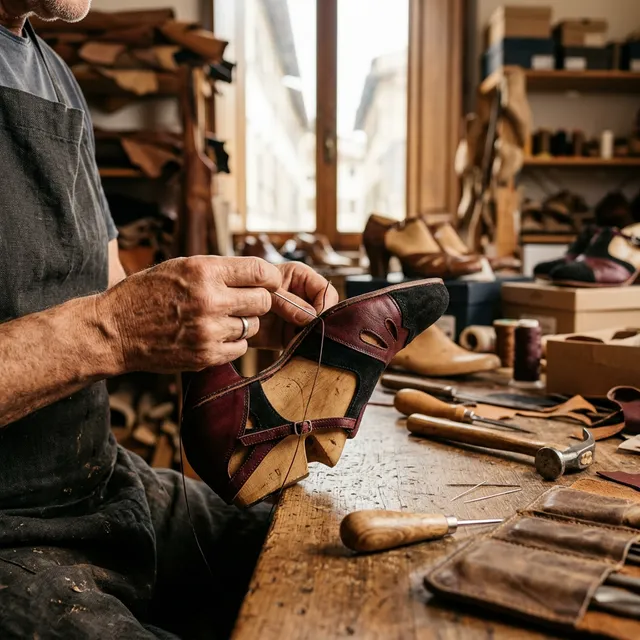
Artisanal tango shoes stand out for their premium full-grain leather, hand-stitched natural leather soles, and Blake or Goodyear construction. They last 3-7 years compared to 6-18 months for industrial shoes, adapt to the foot over time, and provide the controlled grip needed for pivots and turns. Prices start at ~€120, and the annual cost is often lower than cheap alternatives.
What makes a tango shoe artisanal?
- •Premium Full-Grain Leather: Not split or synthetic leather, but hand-selected full-grain hide. This allows the shoe to breathe, prevents blisters, and progressively molds to the dancer's foot.
- •Natural Leather Sole: The sole is the technical heart. Leather offers that selective resistance that allows sliding forward and braking during rotation — exactly what you need for pivots, ochos, and turns.
- •Stitched, Not Glued: The Blake stitch or Goodyear welt method ensures the sole stays attached for years. Industrial glued shoes peel off after a few weeks of intense dancing.
- •Wood or Aluminum Heel: Stable, silent, durable. Nothing like plastic heels that squeak and break.
Always ask the brand: 'What is the construction method?' and 'What type of sole do you use?'. An artisanal brand answers without hesitation. Vague answers are a warning sign.
The comparison that changes perspective: artisanal vs industrial
| FEATURE | ARTISANAL 🇪🇺 | INDUSTRIAL |
|---|---|---|
| Material | Full-grain leather | Synthetic/Split leather |
| Sole | Hand-engraved leather, controlled slide | Rubber: blocks rotation |
| Construction | Hand-stitched (Blake/Goodyear) | Glued, peels off pronto |
| Heel | Turned wood/aluminum | Lightweight plastic, noisy |
| Adaptation | Molds in 2-3 uses | Fixed shape, pressure points |
| Avg. Life | 3-7 years | 6-18 months |
| Price | €120 – €350 | €30 – €80 |
| Cost/Year | ~€40-70/year | ~€30-80/year (zero quality) |
| Repairability | Sole/Heel replaceable | Disposable |
| Track Grip | Optimal slide and brake | Too much or zero grip |
Why the sole makes all the difference on the floor
- •Smooth in linear movement
- •Stable during rotations
- •Sensitive to floor variations
Top brands use 3-4mm cattle leather, fine-shaved at the ball and rougher at the heel. This is only possible in artisanal production.
European artisanal brands: a tradition TangoTab selected
- •Limited batches: quality control on every pair
- •Customization possible: color, heel, closures on request
- •Short and traceable chain: know your shoemaker and methods
- •Post-sale support: repairs and consultancy
Beyond quality, choosing European means supporting local economy, reducing impact, and preserving a dying craft. TangoTab was born to make these treasures accessible.
How to choose your first artisanal tango shoe
- The heel: start right Lower and wider (5-6cm) for beginners. Pros go for 7-8cm.
- The closure: safety first Ankle straps are standard for pivots without compression.
- The size: tighter than usual Typically half a size down for a snug fit.
- Practice vs Milonga Robust for practice, refined for milonga.
FAQ on artisanal tango shoes
Conclusion: quality is an investment
TangoTab is the European vertical marketplace for tango: shoes, apparel, and accessories from the best curated artisanal brands.